Skip to content
The Osara Journal

Tomioka: 富岡商店Sakura Through Craft

Cherry bark from the mountains of Akita, shaped by hand into tea caddies and trays that develop a beautiful patina over time.

Read the story

When we think of sakura, we often picture its delicate pink blossoms in spring. But the cherry tree has more to offer than its flowers. In Japan, its bark has long been used to create beautiful objects that can be appreciated throughout the year.

Tomioka Shoten (富岡商店), based in Kakunodate in Akita Prefecture, is dedicated to preserving Kaba-zaiku (樺細工), the traditional Japanese craft of cherry bark. Using the bark of wild mountain cherry trees, the maker continues a centuries-old practice that turns a natural material into refined objects for daily use. This is sakura expressed not through the flower, but through the lasting presence of the tree itself.

“The beauty of sakura, beyond the bloom.”
01角館に伝わる樺細工

A craft rooted in Kakunodate

Kakunodate is a historic town in Akita Prefecture, northern Japan. It is here that Kaba-zaiku took root, with origins dating back to the late 18th century. Founded in 1970, Tomioka has helped preserve and pass on this tradition.

Kaba-zaiku is a traditional Japanese craft that brings together elegance and practicality. In 1976, it was designated a National Traditional Craft. It also has a history connected to Japan's Mingei (folk craft movement / 民藝). Each piece is shaped by hand, and carries the warmth of the material itself: something both useful and enduring.

Tomioka Shoten shop in Kakunodate with cherry blossom
↑ Tomioka Shoten in Kakunodate
↑ the bark's natural texture
↑ tea spoons, shaped by hand
02山桜の樹皮と森の再生

Bark from the mountain cherry

The use of cherry bark in Japan goes back to the Jōmon period (c. 14,000–300 BCE), when it was used to wrap bows and on the handles of woven baskets. Over time, cherry bark became a material for fine craftsmanship.

The bark used by Tomioka is carefully gathered through a sustainable forestry cycle known as renewal (再生), in which trees are harvested in a way that supports the long-term health of the surrounding mountains. Once polished, the bark reveals a deep amber lustre and the fine horizontal markings unique to the cherry tree.

A craftsman climbing a cherry tree to gather bark
↑ gathering the bark
Close-up of polished cherry bark on a tea caddy
↑ polished to a deep lustre
↑ every piece of bark is different
03茶葉を守る茶筒

Made to keep tea fresh

The tea caddy is the best-known form of Kaba-zaiku. Each one is carefully made so the lid closes tightly, keeping delicate tea leaves fresh.

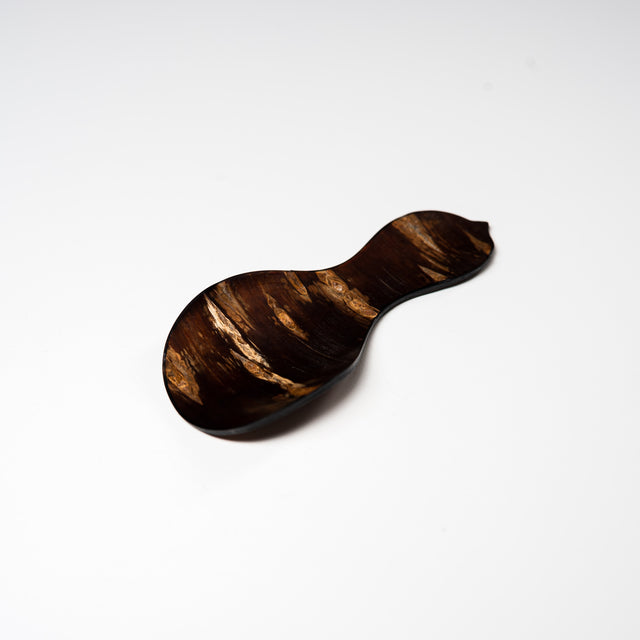
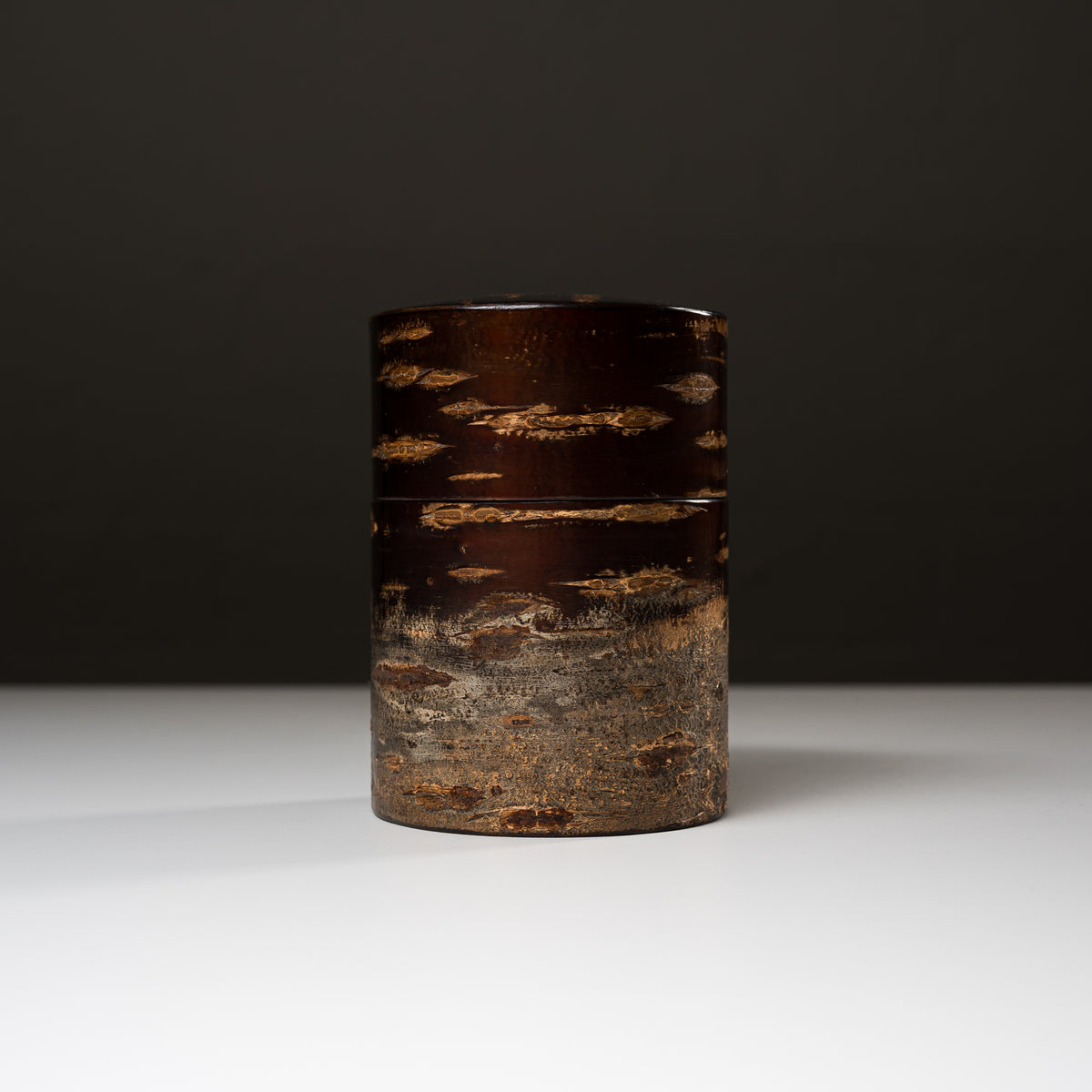
Tomioka's caddies come in many finishes. Bokashi combines polished and marbled bark, bringing out its natural amber tones, while the Sakura caddies are decorated with small cherry blossom petals made from Japanese wingnut wood. The same petals appear on the gourd-shaped Hyotan tea spoon, designed for scooping tea leaves.

↑ a tight-fitting inner lid
↑ Bokashi: polished and marbled
↑ Sakura petals in Japanese wingnut
↑ the Hyotan Sakura tea spoon
↑ the bark's natural markings
04日々に寄り添う盆と器

Trays and bowls for every day

Beyond the tea caddy, the craft extends to trays and bowls. The 16-sided Kikko tray is made with hand-cut pieces of cherry bark arranged in a turtle-shell mosaic across a wooden base, a pattern long associated with good fortune and long life in Japan.

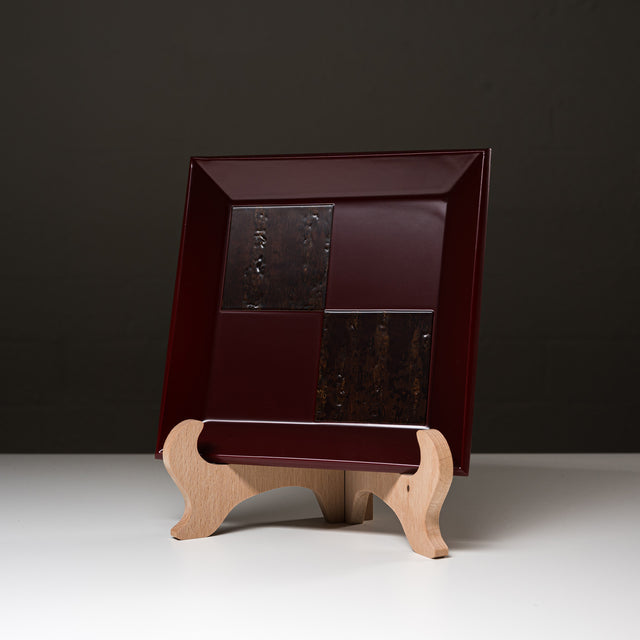
The Benizakura trays set squares of cherry bark into a deep red finish, and the Diamond bowls fold the bark around a faceted form. As the surface matures with use, each piece becomes not simply an object to admire, but a companion in daily life.

↑ the Kikko tray
↑ a turtle-shell mosaic
↑ Benizakura: cherry bark on red
↑ the Diamond bowl
Our picks

Featured pieces

Tea Caddy – Bokashi / 樺細工 茶筒

Tomioka Cherry Bark Tea Caddy - Bokashi / 富岡商店 樺細工
Polished and marbled cherry bark highlights the natural amber tones of the material. Made to seal tightly for delicate tea leaves.
Discover this piece

16-sided Tray – Kikko / 亀甲

Tomioka Cherry Bark 16-sided Tray - Kikko / 富岡商店 樺細工
A 30 cm tray with hand-cut pieces of cherry bark arranged in a striking turtle-shell mosaic.
Discover this piece

Tea Caddy – Sakura – Small / 桜

Tomioka Cherry Bark Tea Caddy - Sakura - Small / 富岡商店 樺細工
Decorated with sakura petals in Japanese wingnut. The surface develops a richer amber gloss over time.
Discover this piece

Tea Spoon – Hyotan / 瓢箪

Tomioka Cherry Bark Tea Spoon - Hyotan / 富岡商店 樺細工
A gourd-shaped tea spoon wrapped in cherry bark, for scooping tea leaves.
Discover this piece

Square Tray – Benizakura / 紅桜

Tomioka Cherry Bark Square Tray 20 cm - Benizakura / 富岡商店 樺細工
Squares of cherry bark set into a deep red tray, 20 cm across.
Discover this piece
About the maker

Tomioka Cherry Bark Craft

Tomioka Shoten (富岡商店), in the historic town of Kakunodate in Akita Prefecture (秋田県角館町), was founded in 1970 and has helped preserve and pass on Kaba-zaiku (樺細工), or cherry bark craft. With origins dating back to the late 18th century, Kaba-zaiku was designated a National Traditional Craft in 1976. It transforms the bark of the mountain cherry into refined, functional pieces that bring together elegance and practicality, reflecting the beauty and warmth of nature. Tomioka continues to honour this heritage, so that Kaba-zaiku thrives for future generations.
Meet the maker's collection
Living with it

Use & care

Cherry bark is a natural material that grows more beautiful with use. A little care keeps it at its best.

  • Wipe with a soft, dry cloth. Avoid washing in water, and never use a dishwasher or microwave.
  • If a piece gets wet, wipe it dry straight away.
  • Keep away from direct sunlight, heaters and high humidity, which can affect the bark.
  • For coloured cherry bark products, gently polish with a soft, dry cloth to restore the shine. Avoid hard cloths or rubbing too firmly, as this may scratch the surface or cause the bark to peel.
  • For products with a rough, bark-like finish, handle gently, as the bark may catch on fabric and split.
  • Handle often: the natural oils from your hands help the surface develop a richer amber gloss over time.
  • Tea caddies: keep the lid closed so the leaves stay fresh, and store away from strong smells.